
Analysis
Why do we trust scientists?
Individuals can’t master the mathematics of cryptography or the molecular biology of vaccines, yet they still trust these fields of science and the suggestions of their exponents to make decisions.
Analysis
Individuals can’t master the mathematics of cryptography or the molecular biology of vaccines, yet they still trust these fields of science and the suggestions of their exponents to make decisions.

Op-eds
From ‘7 basic science discoveries that changed the world’, Nature, October 29, 2025: Basic research is easily mocked because it can seem impractical, but, in fact, it is a major driver of economic growth. “The return on investment in basic research — the return to society — is very high, typically multiple
Analysis
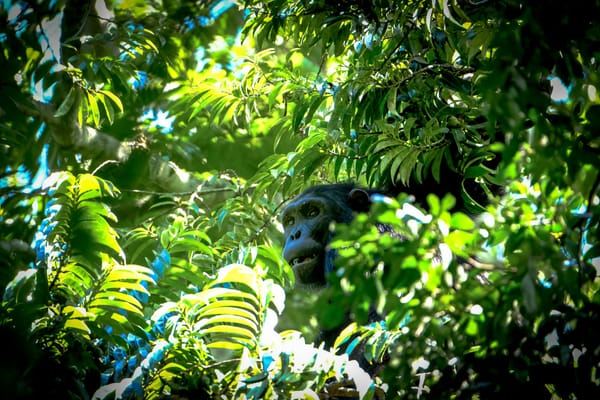
Jane Goodall was a celebrated figure in conservation. Her work with chimpanzees in the Gombe Stream National Park in Tanzania redefined primatology. However, more than a few publications as well as conservation experts writing on social media platforms have since her passing on October 1 called attention to the ways

Analysis
We often understand science primarily in terms of its tangible successes, looking to it for advances in medicine, for the foundations of technologies, and for the tools with which to predict and manage our environment. This perspective views science as a potent problem-solving enterprise. In his chapter in a new

Analysis
The American-Israeli economic historian Joel Mokyr has been awarded one half of the 2025 special Nobel Prize for economics "for having identified the prerequisites for sustained growth through technological progress". Now, by rewarding particular achievements over others, the Nobel Prizes are in general guilty of rendering them seemingly

Analysis
Bayes's rule is one of the most fundamental principles in probability and statistics. It allows us to update our beliefs in the face of new evidence. In its simplest form, the rule tells us how to revise the probability of a hypothesis once new data becomes available. A
Analysis
The double-slit experiment has often been described as the most beautiful demonstration in physics. In one striking image, it shows the strange dual character of matter and light. When particles such as electrons or photons are sent through two narrow slits, the resulting pattern on a screen behind them is
Analysis
India has won 22 Ig Nobel prizes to date. These awards, given annually at Harvard University by the magazine Annals of Improbable Research, honour studies that "first make people laugh, and then make them think" — a description that can suggest the prizes are little more than jokes whereas
Analysis
Maxwell’s demon is one of the most famous thought experiments in the history of physics, a puzzle first posed in the 1860s that continues to shape scientific debates to this day. I’ve struggled to make sense of it for years. Last week I had some time and decided

Analysis
At 6 am on September 13, the CSIR handle on X.com published the following post about an "anti-diabetic medicine" called either "Daiba 250" or "Diabe 250", developed at the CSIR-Indian Institute of Integrative Medicine (IIIM):

Scicomm
The United Nations has designated 2025 the International Year of Quantum Science and Technology. Many physics magazines and journals have taken the opportunity to publish more articles on quantum physics than they usually do, and that has meant quantum physics research has often been on my mind. Nirmalya Kajuri, an
Scicomm
When reading around for my piece yesterday on the wavefunctions of quantum mechanics, I stumbled across an old and fascinating debate about Saturn’s moon Hyperion. The question of how the smooth, classical world around us emerges from the rules of quantum mechanics has haunted physicists for a century. Most